
Across the United States, artificial intelligence is no longer a distant concept reserved for research labs or science fiction. It is embedded in hiring software, customer service platforms, logistics systems, financial analysis tools, and creative workflows.
By 2030, AI will reach a level of maturity that could fundamentally reshape how Americans work, earn, and compete. Entire job categories may shrink. Others will evolve beyond recognition. Some roles will disappear, while new ones emerge just as quickly.
That reality brings us to a question increasingly asked in boardrooms, classrooms, and living rooms across the country: will AI replace jobs in the United States?
The short answer is more complex than yes or no. The longer answer reveals both genuine risk and unprecedented opportunity for the American workforce.
For a deeper breakdown, read our full analysis of the jobs most at risk from AI in the United States.
Why AI Is Advancing Faster Than Expected
Artificial intelligence adoption in the US has accelerated beyond most early forecasts. Three forces are driving this momentum.
Automation at Scale
Modern AI systems are no longer limited to narrow, repetitive tasks. They can now:
- Analyze massive datasets in seconds
- Generate text, images, and code
- Detect patterns humans often miss
- Learn and improve continuously
This shift from basic automation to adaptive intelligence allows companies to automate work once thought immune to machines.
Corporate Adoption Across the US Economy
American corporations are deploying AI aggressively to remain competitive. From retail giants to financial institutions, businesses are integrating AI into core operations rather than treating it as an experimental add-on.
Major technology platforms such as OpenAI and Microsoft have lowered barriers to entry, making advanced AI tools accessible to firms of all sizes.
Cost Efficiency and Productivity Pressure
In an environment shaped by inflation, labor shortages, and shareholder expectations, AI offers a compelling value proposition:
- Lower operational costs
- Faster output
- Consistent performance
- Reduced dependence on hard-to-hire roles
For many executives, the question is no longer whether to adopt AI, but how quickly they can scale it.
Jobs Most at Risk in the United States
AI replacing jobs in the US is not a hypothetical scenario. It is already underway, particularly in roles defined by repetition, predictability, or data-heavy processes.
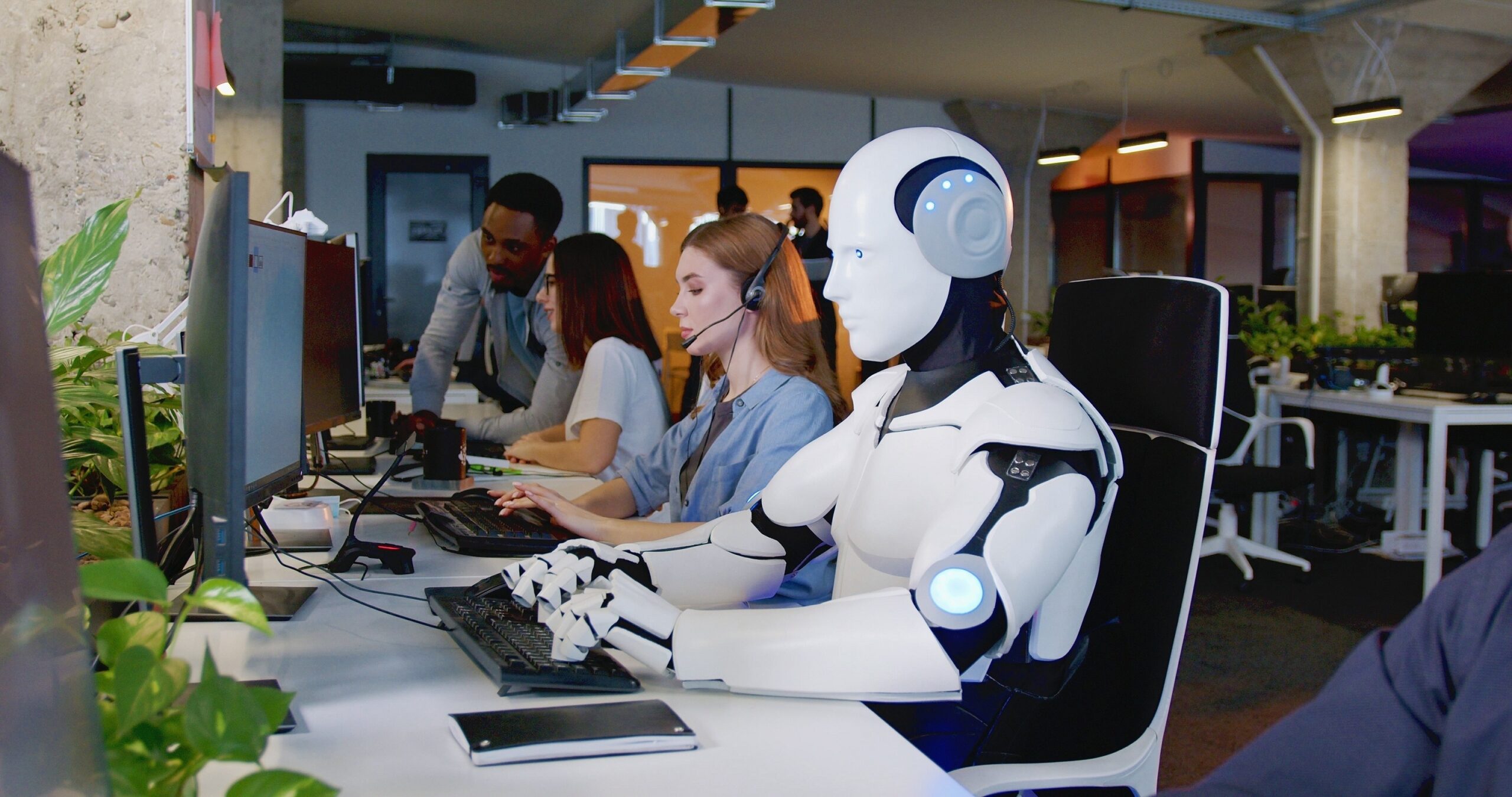
The following job categories face the highest exposure by 2030:
- Administrative and clerical roles
Tasks such as scheduling, data entry, document processing, and basic bookkeeping are increasingly handled by AI-powered software. - Customer service and call center jobs
AI chatbots and voice assistants can resolve routine inquiries, process refunds, and handle troubleshooting at scale. - Retail cashiers and order processors
Self-checkout systems, automated inventory management, and AI-driven demand forecasting reduce the need for frontline staff. - Basic content production roles
Template-based writing, simple graphic design, and routine marketing copy are increasingly generated by AI tools. - Entry-level data analysis jobs
AI can rapidly analyze spreadsheets, generate insights, and create visual reports that once required junior analysts.
These roles are vulnerable not because workers lack value, but because their tasks are highly structured and rule-based.
Jobs AI Is Unlikely to Replace
While headlines often focus on displacement, many careers remain resilient precisely because they depend on uniquely human strengths.
Careers safe from AI tend to involve judgment, empathy, creativity, or complex physical interaction.
These include:
- Healthcare professionals
Doctors, nurses, therapists, and caregivers rely on human trust, ethical decision-making, and nuanced communication. - Skilled trades
Electricians, plumbers, construction managers, and technicians perform hands-on work in unpredictable environments. - Educators and trainers
Teaching requires emotional intelligence, mentorship, and real-time adaptation to human learning needs. - Leadership and management roles
Strategic decision-making, conflict resolution, and organizational culture cannot be automated effectively. - Creative and conceptual professions
Writers, designers, filmmakers, and artists who focus on originality and cultural insight retain strong human advantage.
AI may assist these roles, but full replacement remains unlikely.
How AI Will Transform the American Workforce
The future of work in America will not be defined solely by job loss. It will be shaped by transformation.
Job Evolution, Not Just Elimination
Many roles will shift rather than disappear. Employees will:
- Spend less time on repetitive tasks
- Focus more on strategy, oversight, and creativity
- Use AI tools as productivity multipliers
For example, financial analysts will rely on AI for modeling, but retain responsibility for interpretation and risk judgment.
Human and AI Collaboration
The most productive workplaces will pair human judgment with machine efficiency. This collaboration is already visible in fields such as cybersecurity, healthcare diagnostics, and legal research.
AI handles volume and speed. Humans provide context and accountability.
New Career Paths
As AI and employment in the United States evolve, entirely new roles are emerging:
- AI operations managers
- Model auditors and ethics specialists
- Prompt engineers and workflow designers
- Human-AI interaction specialists
These jobs did not exist a decade ago, and they will expand rapidly through 2030.
Will AI Replace Jobs in the United States or Redefine Them?
This question sits at the center of the national conversation. Will AI replace jobs in the United States outright, or will it fundamentally redefine what work looks like?
Historical precedent suggests transformation rather than collapse. Past technological shifts—from electricity to the internet—disrupted labor markets but ultimately expanded economic opportunity.
The difference with AI lies in speed. Change is happening faster, leaving less time for adjustment.
That makes preparation essential.
Skills Americans Will Need to Stay Relevant
The jobs at risk from AI share one thing in common: limited adaptability. The skills that offer protection are those that evolve alongside technology.
Analytical Thinking
Workers who can interpret data, question outputs, and make informed decisions will remain indispensable.
Creativity
Original thinking, storytelling, design, and innovation are difficult to replicate with algorithms alone.
Technical Literacy
Understanding how AI tools work, even at a basic level, will be as essential as computer literacy once was.
This does not require becoming a software engineer. It requires comfort working with intelligent systems.
Adaptability
Careers safe from AI will belong to those who continuously learn, reskill, and pivot as roles change.
The most vulnerable workers are not those in a specific industry, but those resistant to change.
Should Americans Be Worried About AI?
Concern is reasonable. Panic is not.
AI will displace certain roles, particularly in the short term. Some workers will face difficult transitions, and not all companies will manage change responsibly.
However, widespread unemployment driven solely by AI is unlikely.
Several factors temper the risk:
- Many industries face labor shortages
- New roles will absorb displaced workers
- Human oversight remains legally and ethically required
- Economic growth still depends on consumer income
The greater risk lies in unequal adaptation. Workers with access to education and reskilling will advance faster than those without.
That gap, not AI itself, represents the real challenge for American society.
Final Thoughts: Preparing for an AI-Driven Future
By 2030, artificial intelligence will be woven into nearly every corner of the US economy. Some jobs will fade. Others will transform. Many new ones will emerge.
The question is not whether AI will change work, but how Americans respond to that change.
Workers who embrace learning, develop human-centric skills, and treat AI as a tool rather than a threat will remain competitive. Employers who invest in retraining rather than replacement will build stronger, more resilient organizations.
The future of work in America will belong not to machines alone, but to humans who learn how to work alongside them.